
The Savior Trap
Dignity begins where the desire to "save" ends
The Warm Trap of the Savior Complex
Society has a deep, quiet sickness, and it is almost always disguised as benevolence.
We have been conditioned to believe that “helping” people means managing them. Traditional charities, modern non-profits, and state-sponsored welfare systems have built a massive, multi-billion-dollar industry around the comfortable illusion of the savior complex.
They treat people in crisis as projects to be managed rather than human beings to be respected.
This model relies on a quiet, patronizing transaction. To receive support under the legacy framework, you must first surrender your dignity.
You are forced to perform your trauma, to recount your worst days on demand, fit neatly into sterile bureaucratic checkboxes, and prove how “deserving” you are of basic human relief.
The institution extracts your story to fuel its marketing and public relations campaigns, exchanges resources for your compliance, and ultimately builds a system of permanent dependency.
By keeping people dependent, the savior gets to keep feeling like a savior. It is an act of soft preservation disguised as mercy, and it is the ultimate betrayal of human agency.
With a statement made by Eduardo Galeano on the vertical nature of "help":
"I don't believe in charity. I believe in solidarity. Charity is so vertical. It goes from the top to the bottom. Solidarity is horizontal. It respects the other person. I have a lot to learn from other people."

The Hard Truth of Inherent Sovereignty
This brings us to the fourth pillar of the ethical pathway: Sovereignty, Agency, and Autonomy.
To break this cycle, we must step out of the vertical trap. We must embrace a truth that is as simple as it is challenging: real dignity is not a handout with strings attached; it is possessing absolute self-determination.
This is the philosophical heart of our fourth pillar. We shift our focus entirely from managing outcomes to restoring capacity.
We do not view the people we encounter as broken machinery requiring our expert repair, nor do we treat them as bureaucratic “projects” to be filed away. They are the sovereign, ultimate authors of their own lives.
To operationalize this sovereignty, we hold ourselves to three non-negotiable principles:
Terms of Engagement:
We help on their terms, not ours. If we require a person to warp their reality or jump through arbitrary administrative hoops to receive support, we are not giving, we are bargaining.
Trusting Wisdom:
We recognize that no external institution, academic, or “savior” knows a person’s life, needs, and survival mechanics better than they do. They hold the wisdom of their own experience; we simply provide the raw material to help them act on it.
Accepting Choice:
True solidarity is horizontal, which means it must survive disagreement. We stand by those we serve and support their decisions, even when their choices run entirely counter to our own strategic preferences, timelines, or comfortable expectations.
If your solidarity demands that the other person behave exactly as you wish, it is not solidarity at all. It is just controlwith a softer name.

Rewriting the Rules of Support
To dismantle a multi-billion-dollar savior industry, abstract philosophy is useless on its own. Good intentions do not break chains; they usually just polish them. To truly shift the paradigm, we had to build an entirely different machine—one where the savior complex is structurally outlawed.
To do this, we anchor our actions in Laniavera—a word derived from “ours, before action, true.”
Laniavera is not a corporate slogan or a marketing framework; it is a Doctrine of Perception. It is a rigorous way of seeing that demands we treat everything—a soil, a community, an institution, or a human being—as a sovereign subject to be met on its own terms, never an object to be manipulated or a metaphor to validate our own goodness.
In the legacy charity model, institutions act as gatekeepers. They stand in the middle of the road, forcing individuals to trade their dignity for basic resources. This is a mechanical failure of relationship.
In Laniavera, the act of holding up a mirror to help someone see their own strength is the sixth movement of a deep, patient process. It is preceded by meeting, observing, listening, discerning, and translating.
When legacy charities rush in to “save” people without doing this groundwork, they hold up the mirror too early. A mirror held too early does not show the subject; it only reflects the savior’s own face.
The Ethical Pathway Foundation is the operational expression of this doctrine. To keep our relationship horizontal and respect absolute human sovereignty, we outlawed the gatekeeper model entirely. Instead, we function strictly as a high-capacity utility conduit:
We transfer raw systemic strength:
We do not decide who is “worthy” of standing on their own feet. Laniavera treats resources like water running through a pipe—it is there to restore capacity, completely unconcerned with the behavioral compliance of the person receiving it.
We hand over the tools:
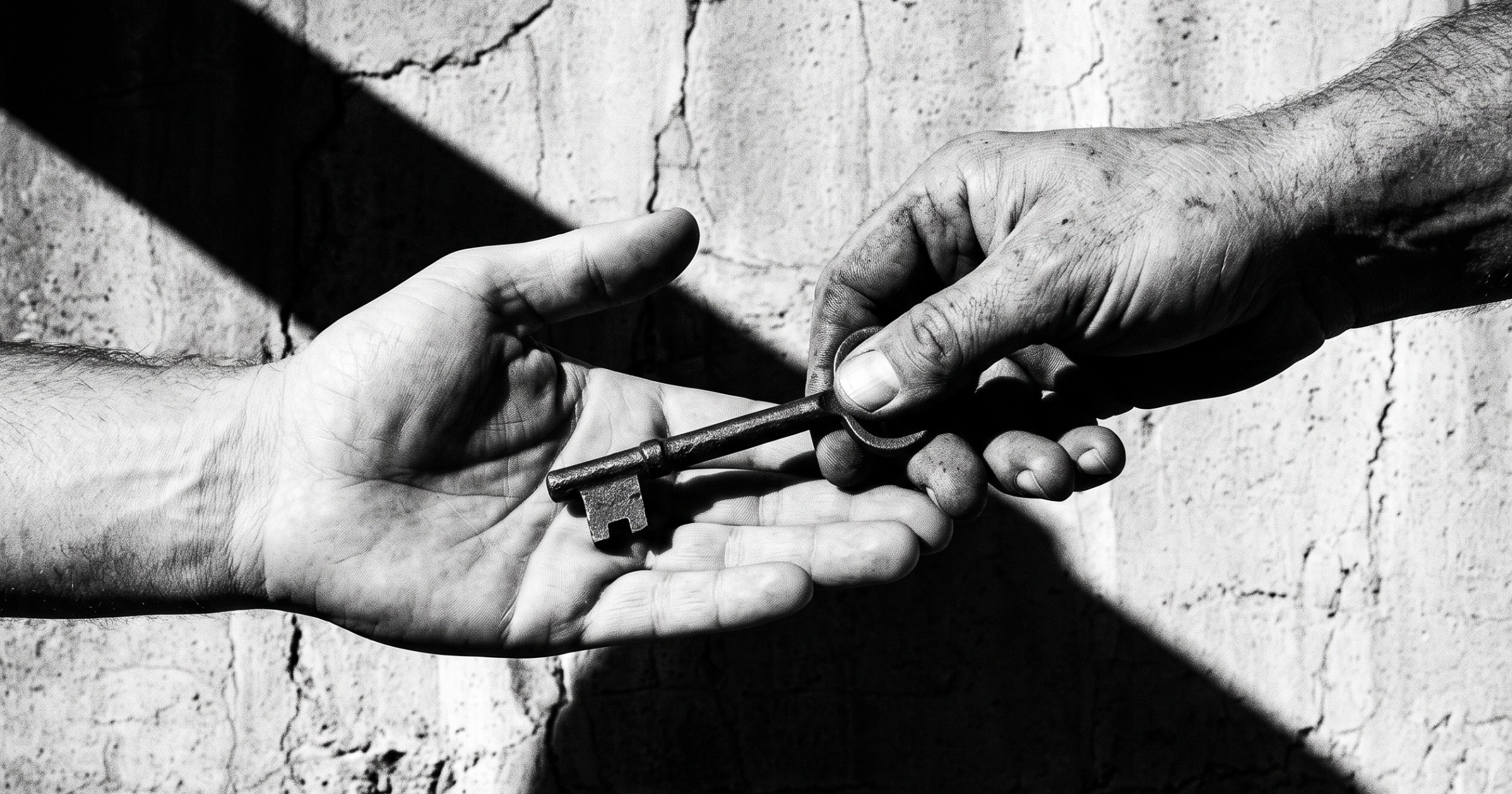
We do not lease out survival or attach lifetime rules to our support. We deliver the raw, physical, legal, and operational assets directly into the hands of the individual so they can build their own defense.
We step completely out of the way:
The moment the weight is transferred, our operational rules dictate that we retreat. We do not linger to take promotional photos, we do not write narrative impact reports for PR, and we do not extract social currency.
By enforcing a strict, mechanical exit, we ensure that the space remains entirely yours. The individual is left in absolute, un-compromised possession of their life. They will remain the sole owner of their triumph, their struggle, and their trajectory.
To serve a sovereign subject is to hold a mirror that reflects their inherent power, not your benevolence. If your support does not work to make itself obsolete, you are not transferring strength—you are investing in their dependency to subsidize your own ego.
Reclaiming the Mirror
We must stop treating human suffering as a currency to purchase our own moral security.
If you truly want to support human agency, you must be willing to starve your own ego. You must trade the warm, self-congratulatory high of “saving” someone for the cold, demanding, and horizontal friction of stepping aside so they can rule themselves.
Real solidarity is not comfortable; it is an act of quiet, ego-stripping surrender. It means refusing to play the hero so that the subject can remain the undisputed author of their own recovery.
The next time you seek to offer help, look closely in the mirror and ask yourself:
Are you trying to give them back their power, or are you just trying to feel powerful?
Ultimately, sovereignty cannot be granted; it can only be recognized. The work of restoring capacity is quiet, unglamorous, and deeply demanding. It requires us to dismantle the pedestals we build for ourselves and replace them with the flat, horizontal ground of true solidarity.
When we step back, we allow the natural wave of human resilience to rebound to its rightful peak. We do not save people. We simply clear the path so they can save themselves.
